About Picnic at Hanging Rock
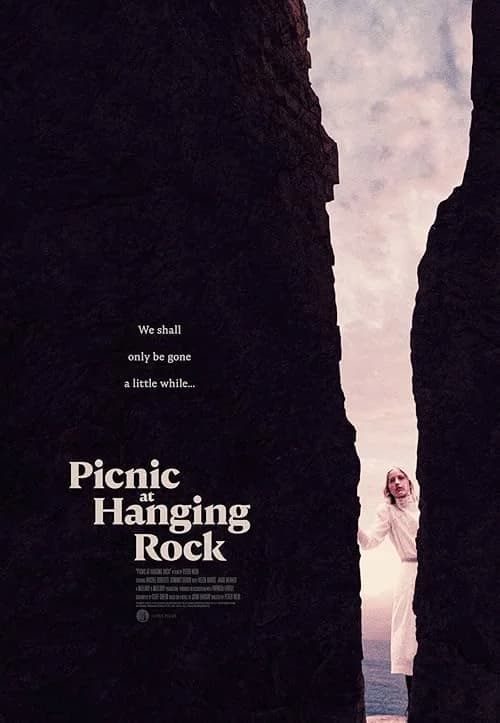
Peter Weir's 1975 masterpiece 'Picnic at Hanging Rock' remains one of Australian cinema's most enigmatic and atmospheric achievements. Set on a stifling Valentine's Day in 1900, the film follows students and staff from Appleyard College, a strict girls' boarding school, as they embark on a picnic to the ancient volcanic formation of Hanging Rock. What begins as a genteel excursion transforms into an enduring mystery when three students and a teacher vanish without explanation, leaving behind a community fractured by grief, obsession, and unanswerable questions.
The film's power lies not in providing solutions, but in its hypnotic, dreamlike evocation of mystery. Weir masterfully builds tension through ethereal cinematography, a haunting pan-flute score by Gheorghe Zamfir, and deliberate, lingering pacing. The performances, particularly by Helen Morse as the romantic Mademoiselle de Poitiers and Rachel Roberts as the stern headmistress Mrs. Appleyard, are understated yet profoundly effective, capturing the repressed emotions of Edwardian society confronting the inexplicable.
'Picnic at Hanging Rock' is essential viewing for its exploration of themes beyond the central disappearance: the clash between rigid European order and the primordial, indifferent Australian landscape; the awakening of adolescent sexuality; and the psychological unraveling of a community. It's a film that lingers in the mind, inviting interpretation and rewarding multiple viewings. For lovers of atmospheric mystery, poetic filmmaking, and cinema that prioritizes mood over plot resolution, this is an unforgettable experience that continues to haunt and fascinate nearly five decades after its release.
The film's power lies not in providing solutions, but in its hypnotic, dreamlike evocation of mystery. Weir masterfully builds tension through ethereal cinematography, a haunting pan-flute score by Gheorghe Zamfir, and deliberate, lingering pacing. The performances, particularly by Helen Morse as the romantic Mademoiselle de Poitiers and Rachel Roberts as the stern headmistress Mrs. Appleyard, are understated yet profoundly effective, capturing the repressed emotions of Edwardian society confronting the inexplicable.
'Picnic at Hanging Rock' is essential viewing for its exploration of themes beyond the central disappearance: the clash between rigid European order and the primordial, indifferent Australian landscape; the awakening of adolescent sexuality; and the psychological unraveling of a community. It's a film that lingers in the mind, inviting interpretation and rewarding multiple viewings. For lovers of atmospheric mystery, poetic filmmaking, and cinema that prioritizes mood over plot resolution, this is an unforgettable experience that continues to haunt and fascinate nearly five decades after its release.